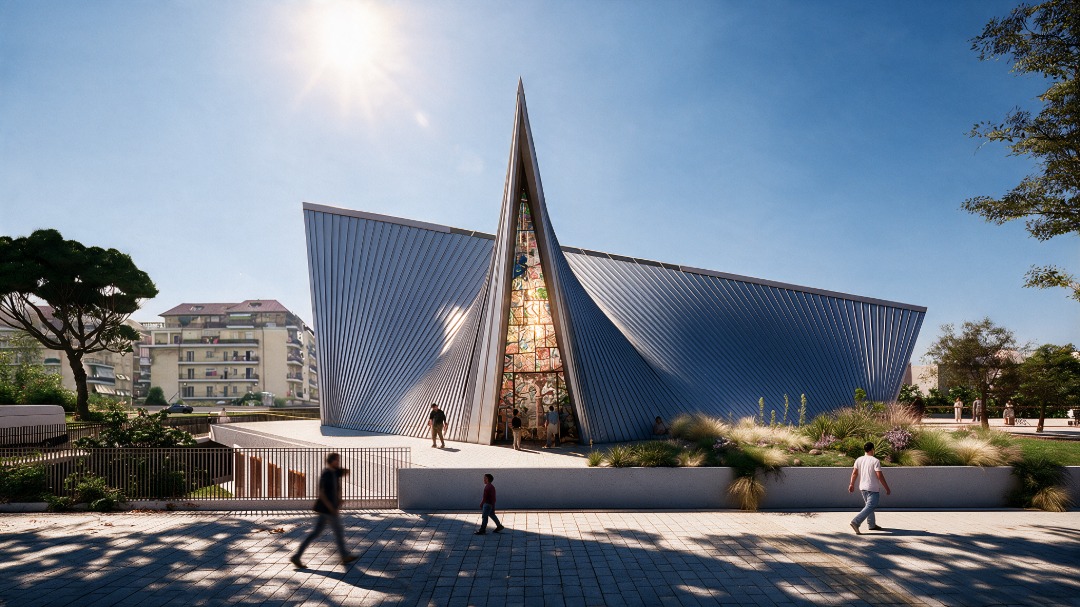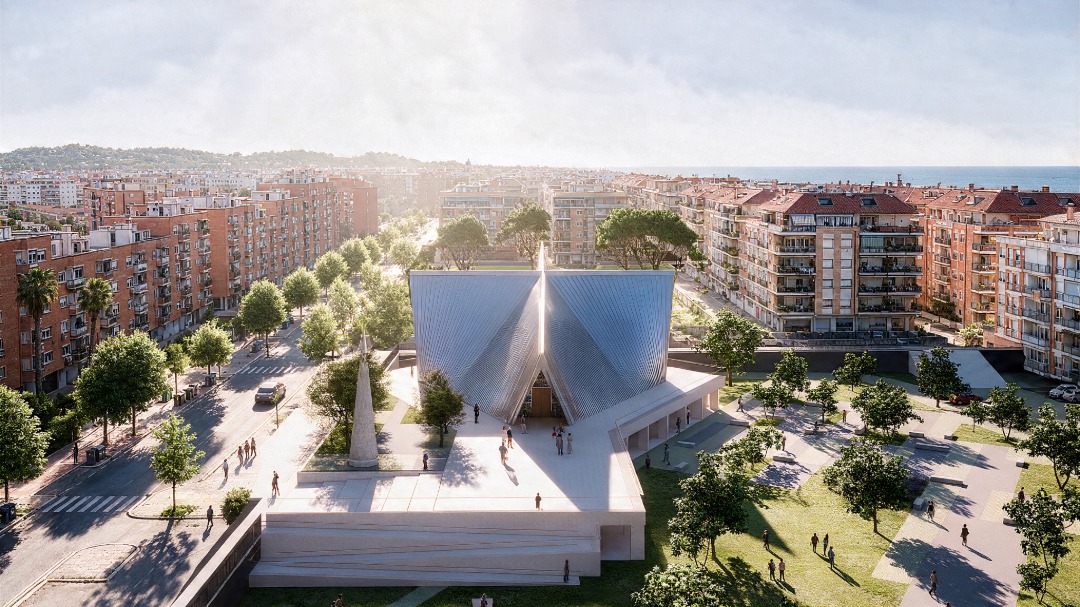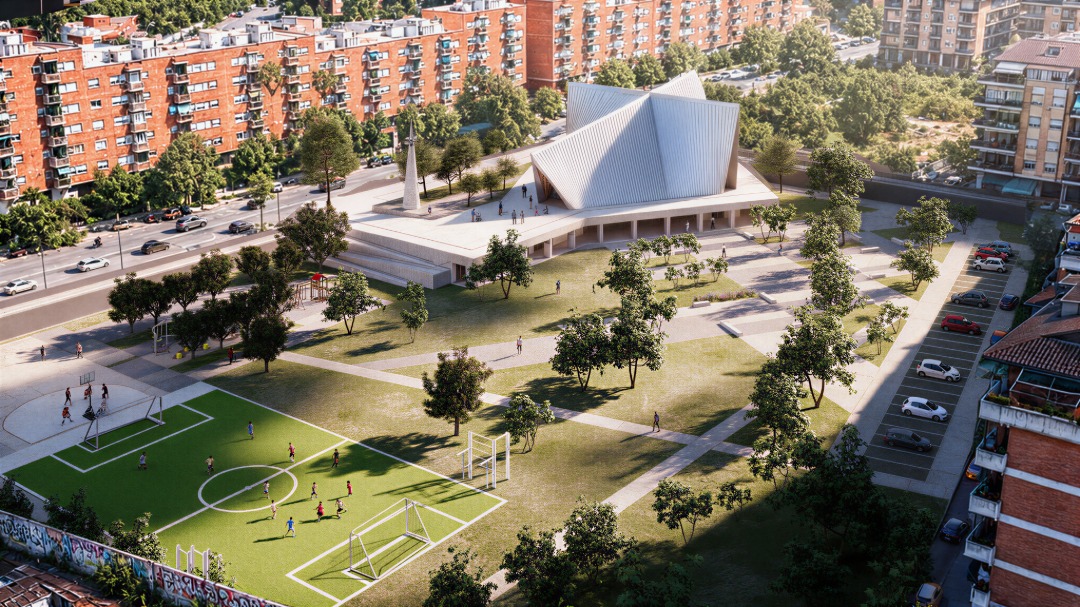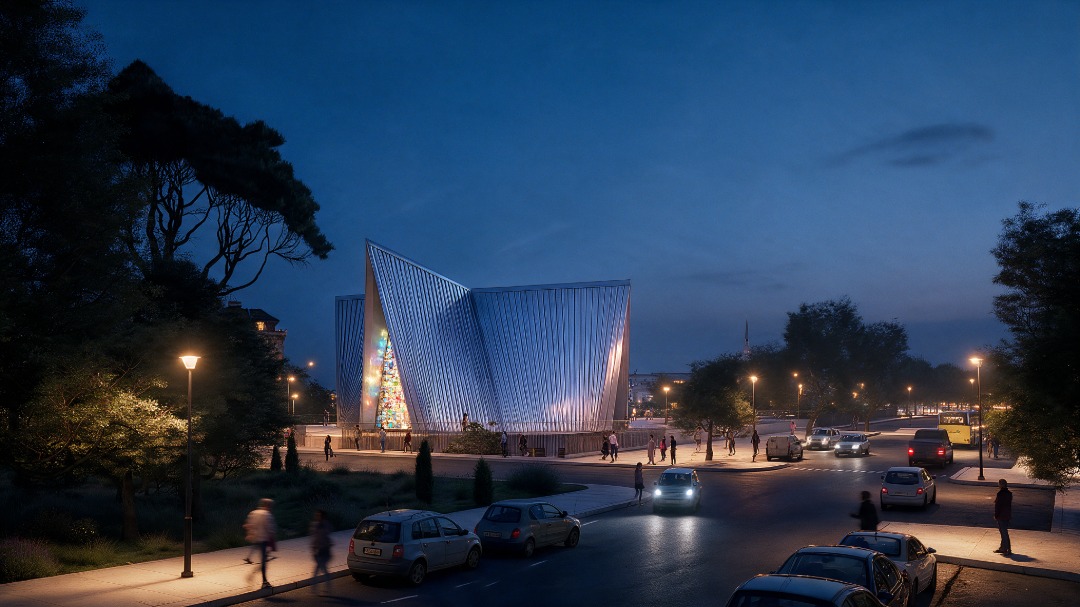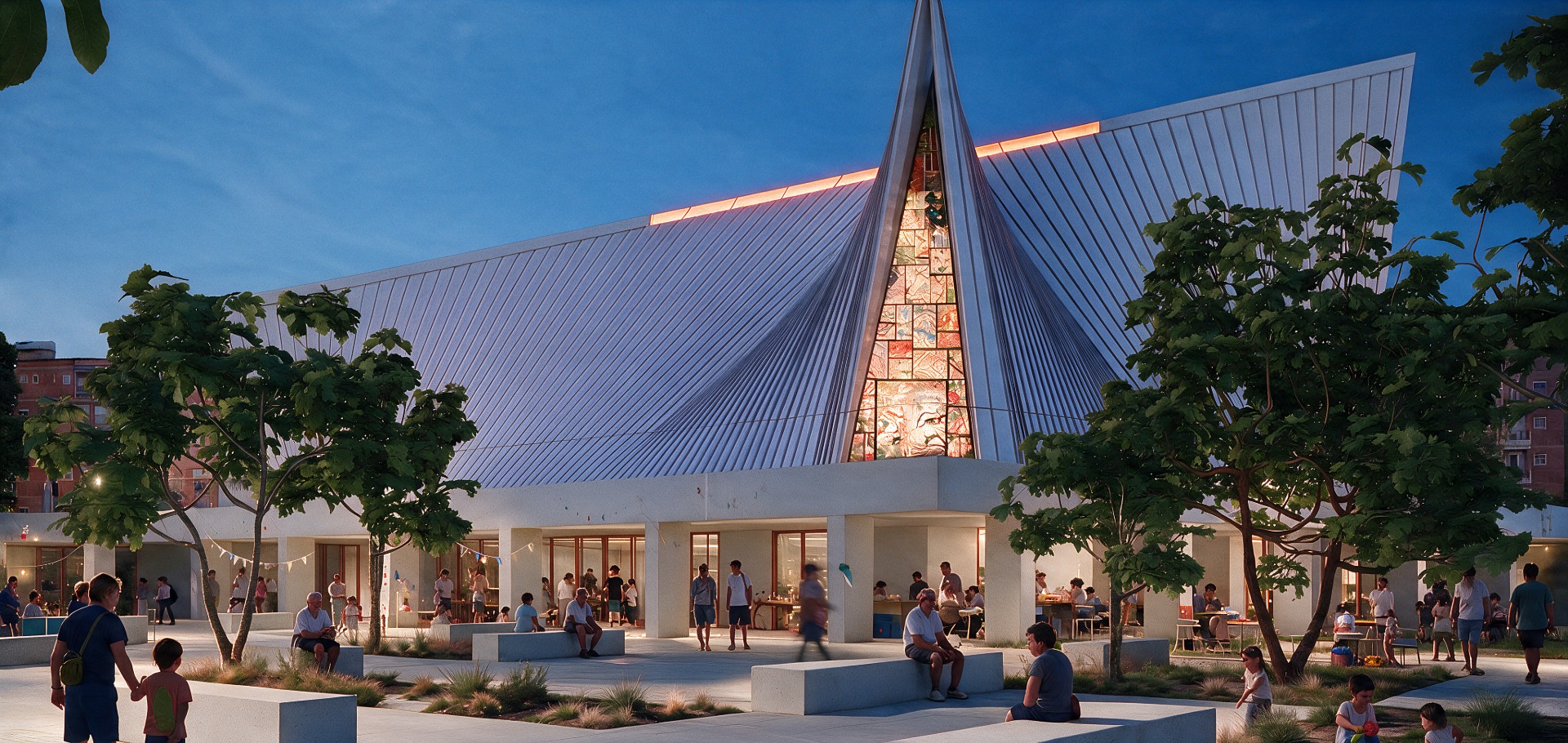

Located within Ostia’s landscape of repetitive social housing blocks and anonymous urban spaces, this church is envisioned as a new landmark for the community: a place of gathering, reflection, and hope. Rather than standing apart from its surroundings, the building seeks to give identity and meaning to the neighborhood, becoming a visible symbol of its future.
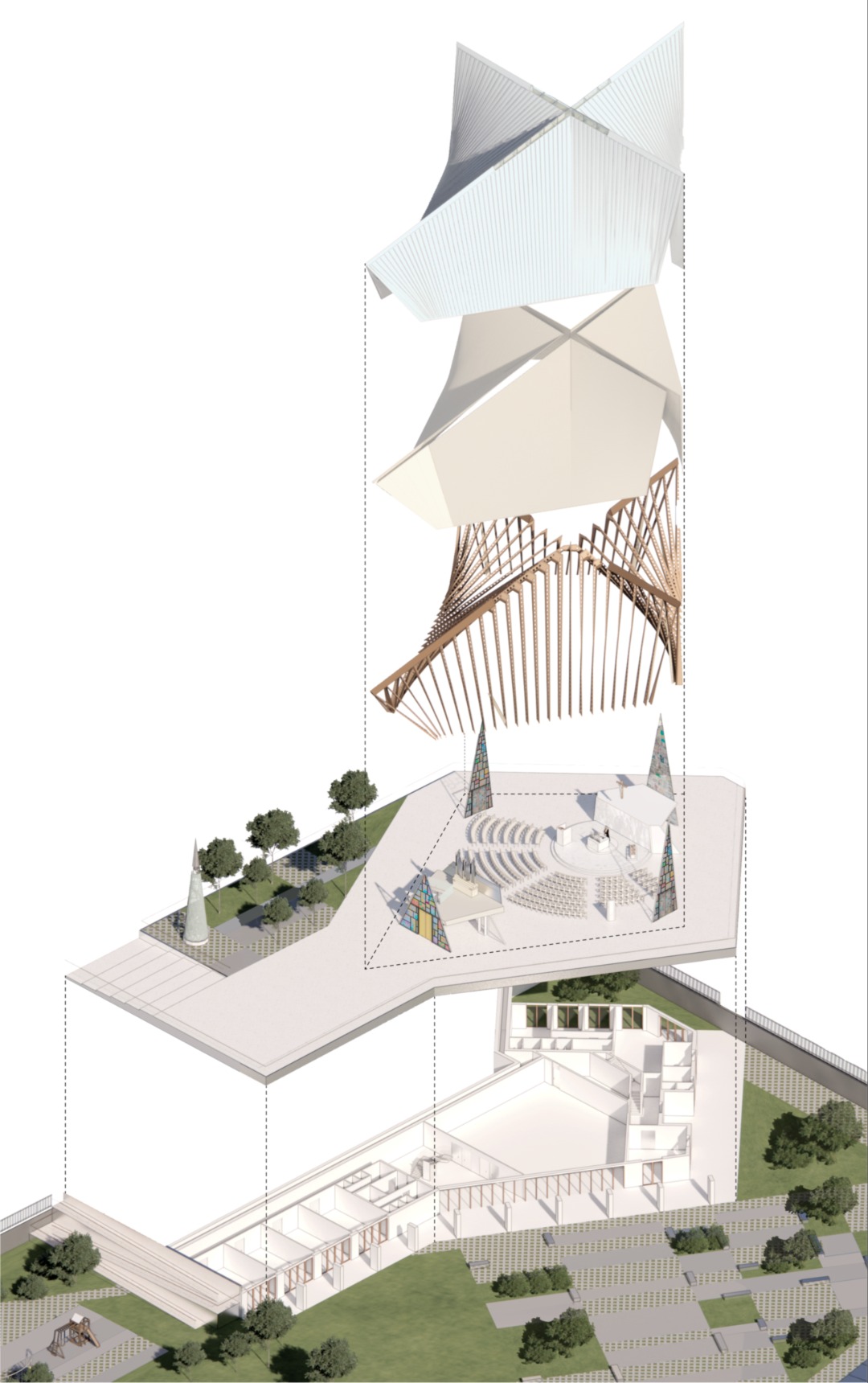
The design is based on the idea of the “Latent Cross.” In the early centuries of Christianity, before the cross emerged as an explicit architectural and religious symbol, it often existed as a discreet sign of faith. Inspired by this historical condition, the project transforms and compresses the geometry of the cross into an abstract diamond-shaped plan. At ground level, the cross is concealed within the architecture, sensed rather than seen. As the building rises upward, however, the form gradually unfolds, and the roof ultimately emerges as a clear cruciform figure. This transformation expresses a spiritual journey from the earthly to the divine, allowing the symbolic meaning of the church to reveal itself through space rather than decoration.
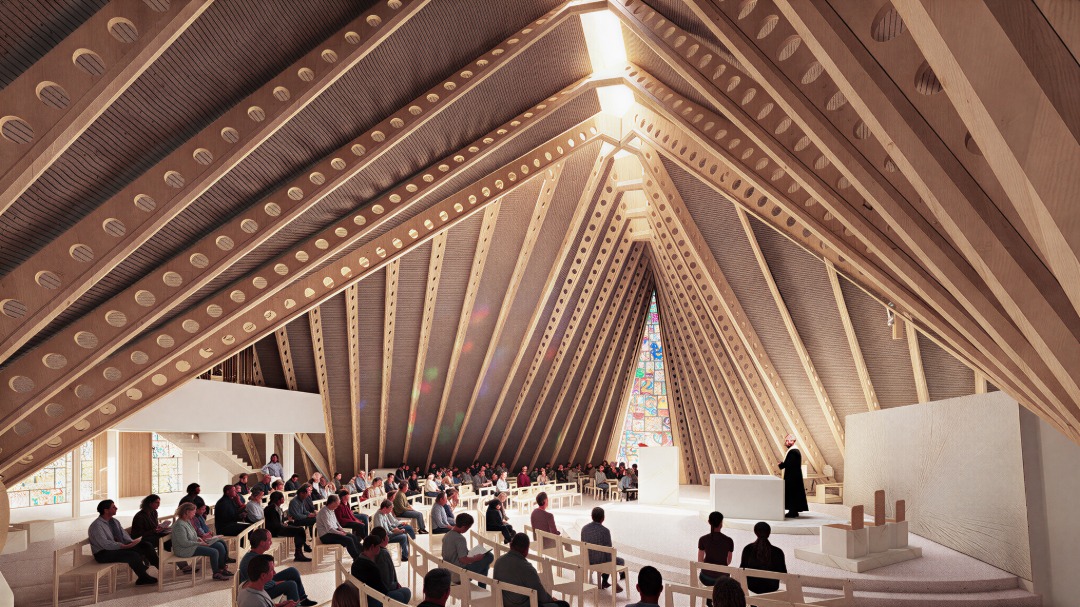
The building’s structure is generated through this geometric evolution. To create the transition from a diamond-shaped plan to a cross-shaped roof using a simple and economical construction method, straight timber beams are stacked and incrementally shifted as they rise. Through the repetition of this straightforward system, a gently curved shell structure is formed. The use of timber provides warmth and intimacy to the interior while also reducing embodied carbon, construction costs, building time, and site disturbance. The result is a sustainable and efficient structure that combines environmental responsibility with spatial richness.
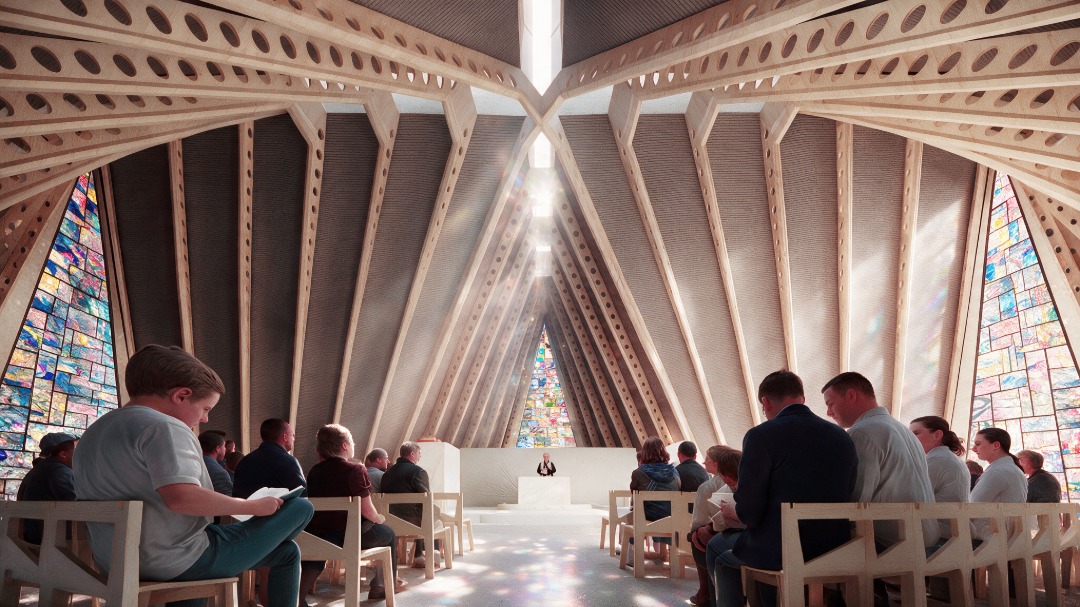
Light plays an equally important role in shaping the experience of the church. The four corners of the diamond are cut away to create elongated triangular openings that function as entrances and windows. These façades are entirely composed of stained glass, allowing natural light to penetrate deep into the interior. Rather than commissioning a celebrated artist, the project proposes a more community-centered approach: transforming graffiti created by local young people on the construction fences surrounding the site into stained-glass compositions. Their drawings become a source of light within the church itself, illuminating the space with the creativity of the community. In doing so, the building fosters pride, belonging, and ownership, allowing local residents to recognize themselves in a place dedicated to hope, faith, and a shared future.