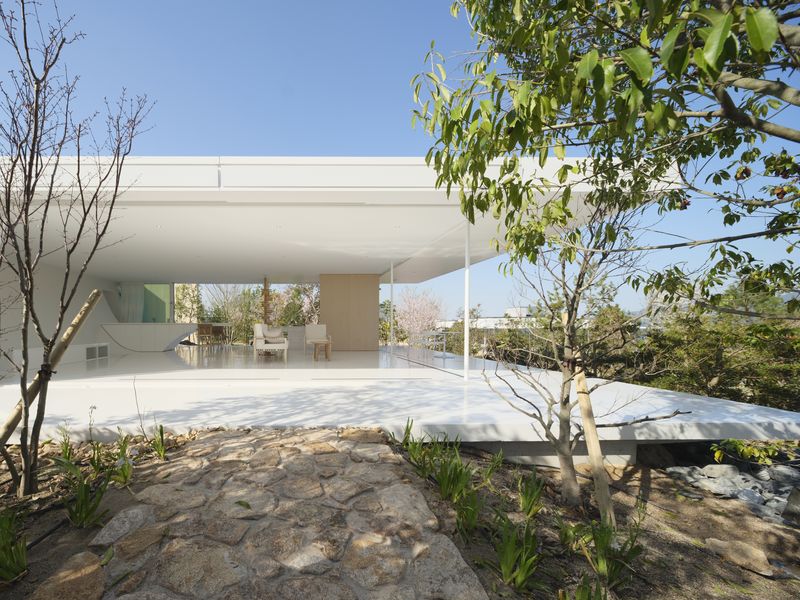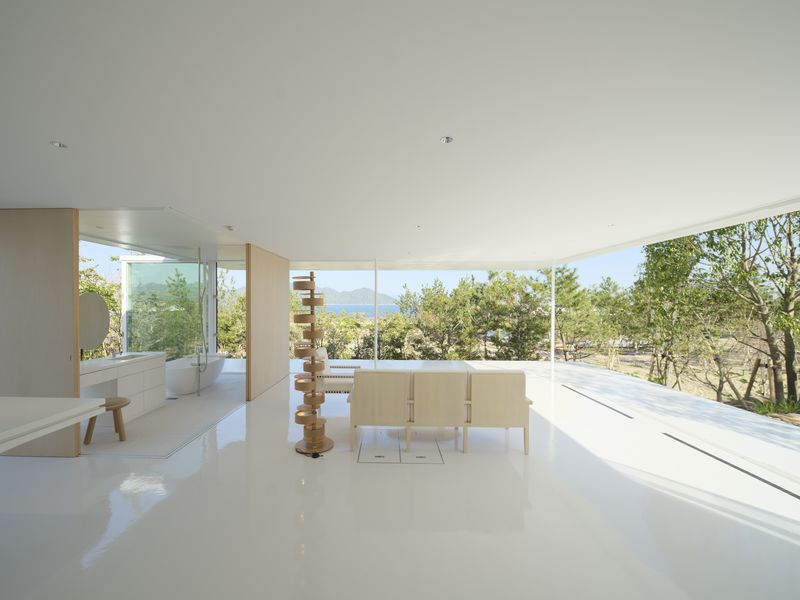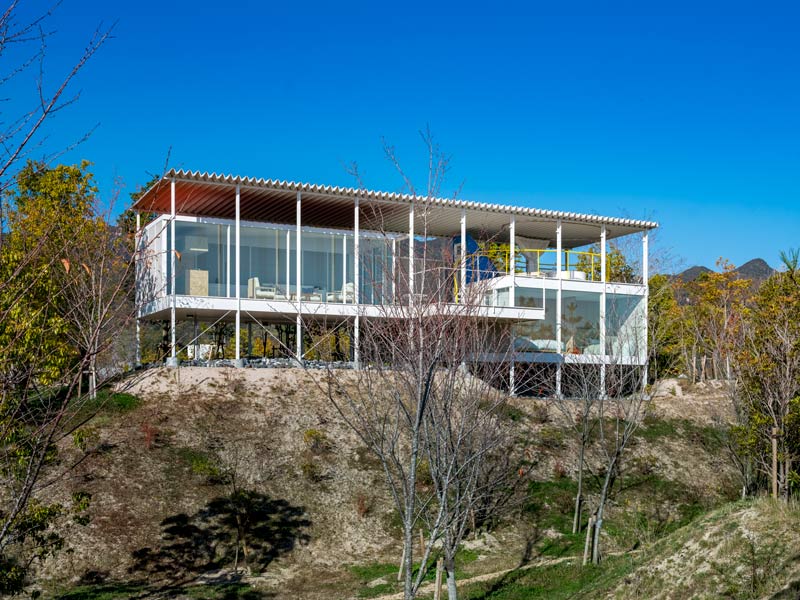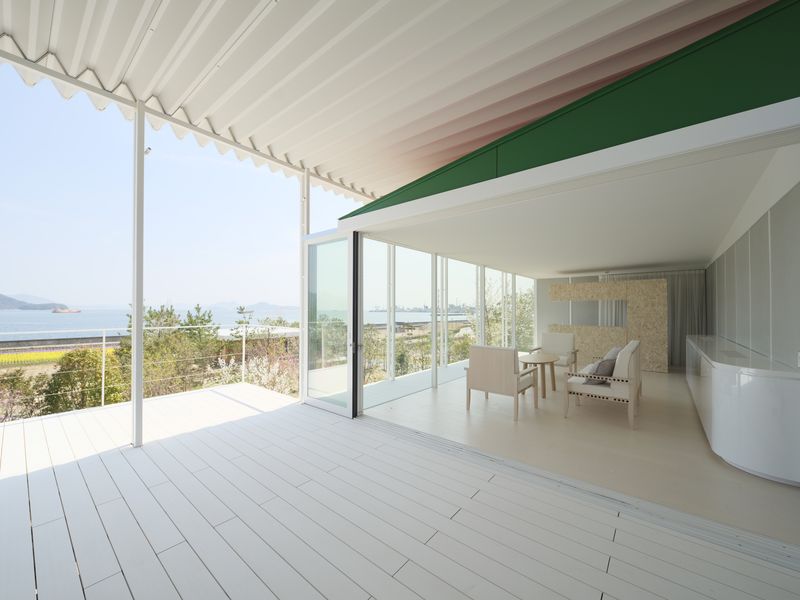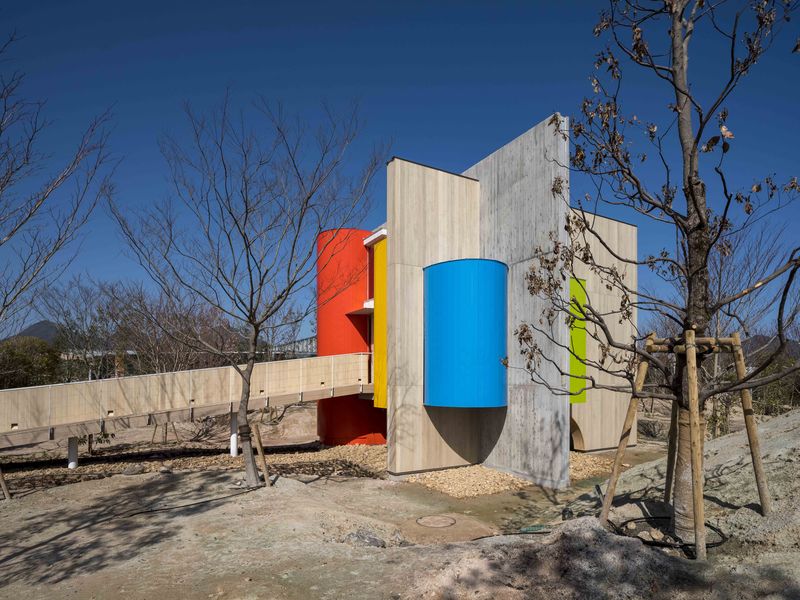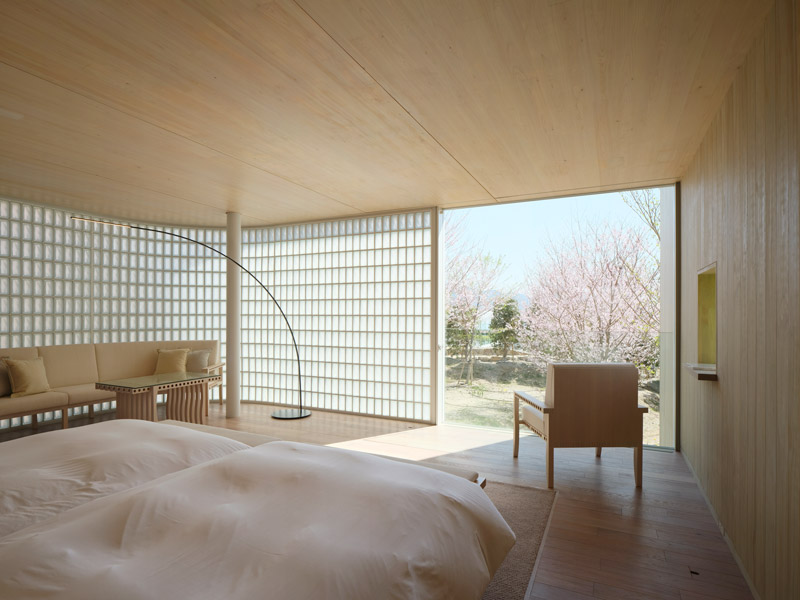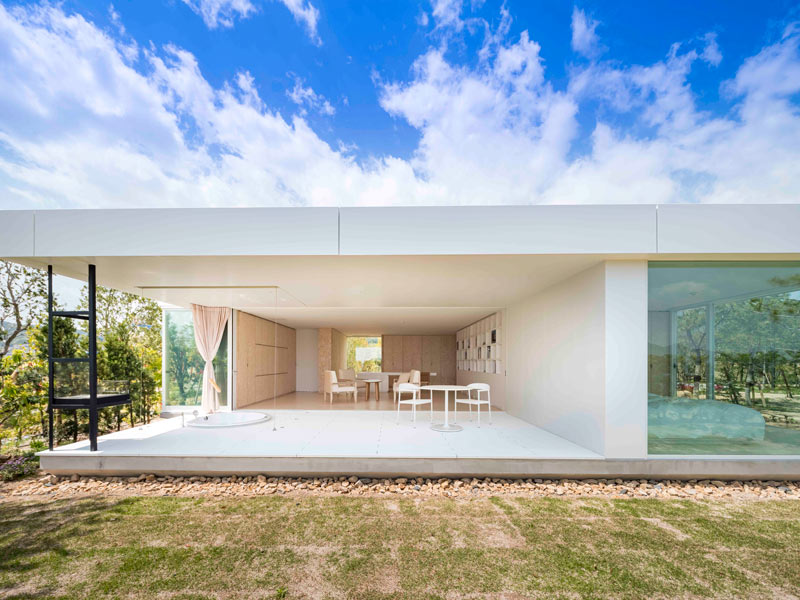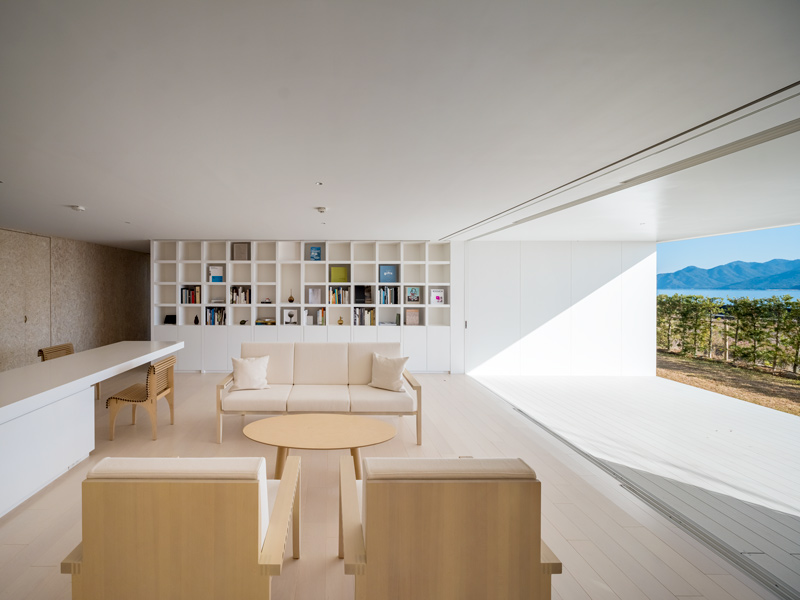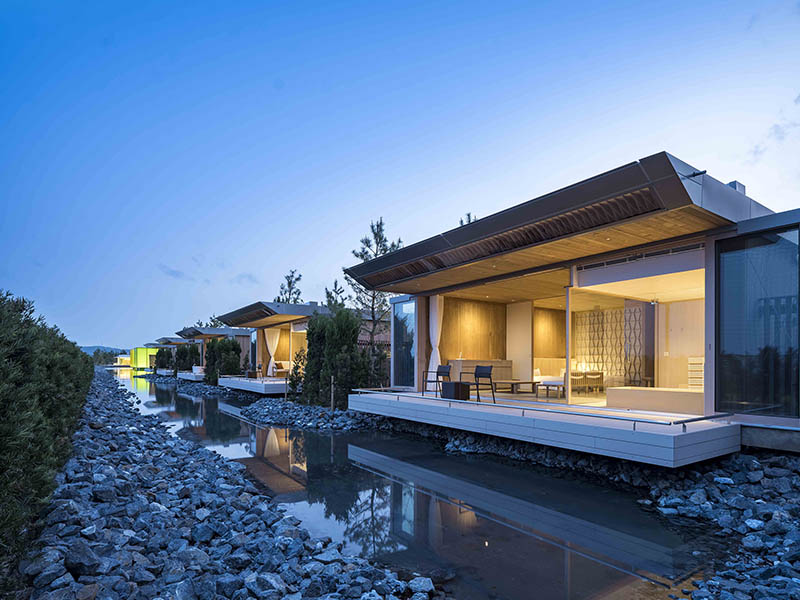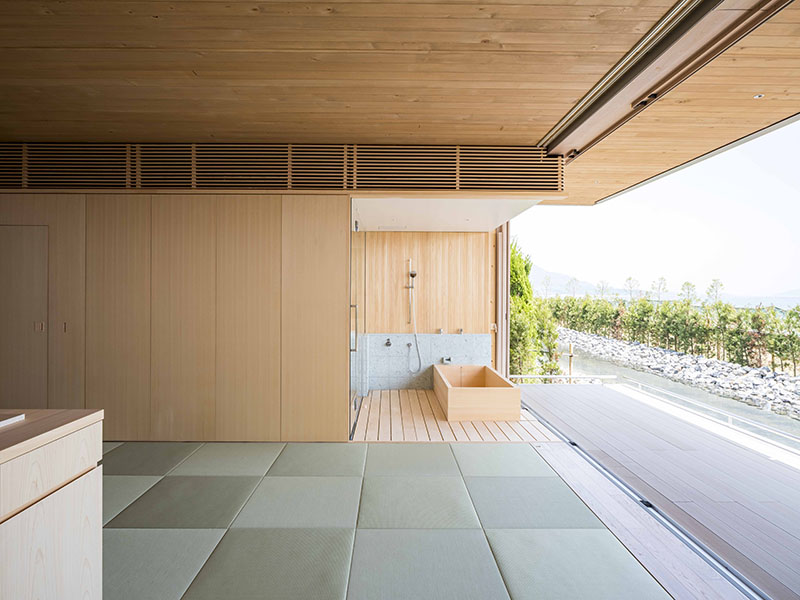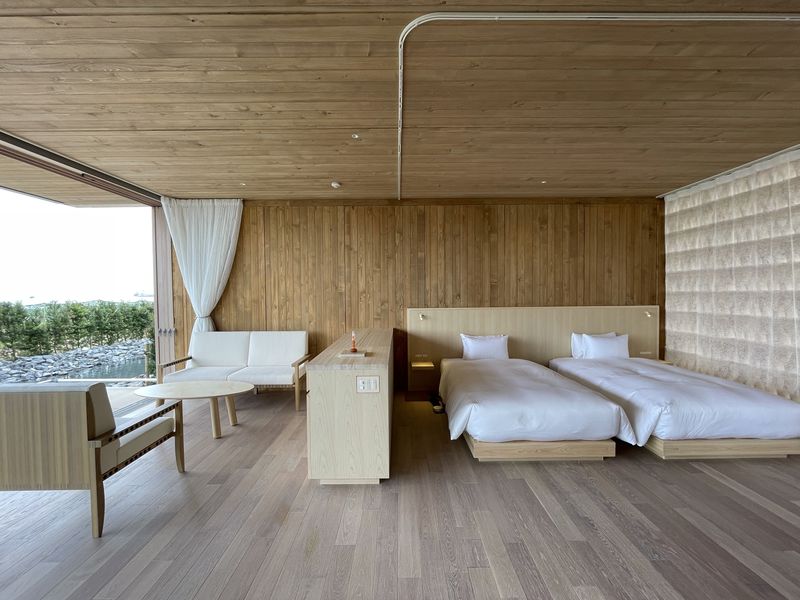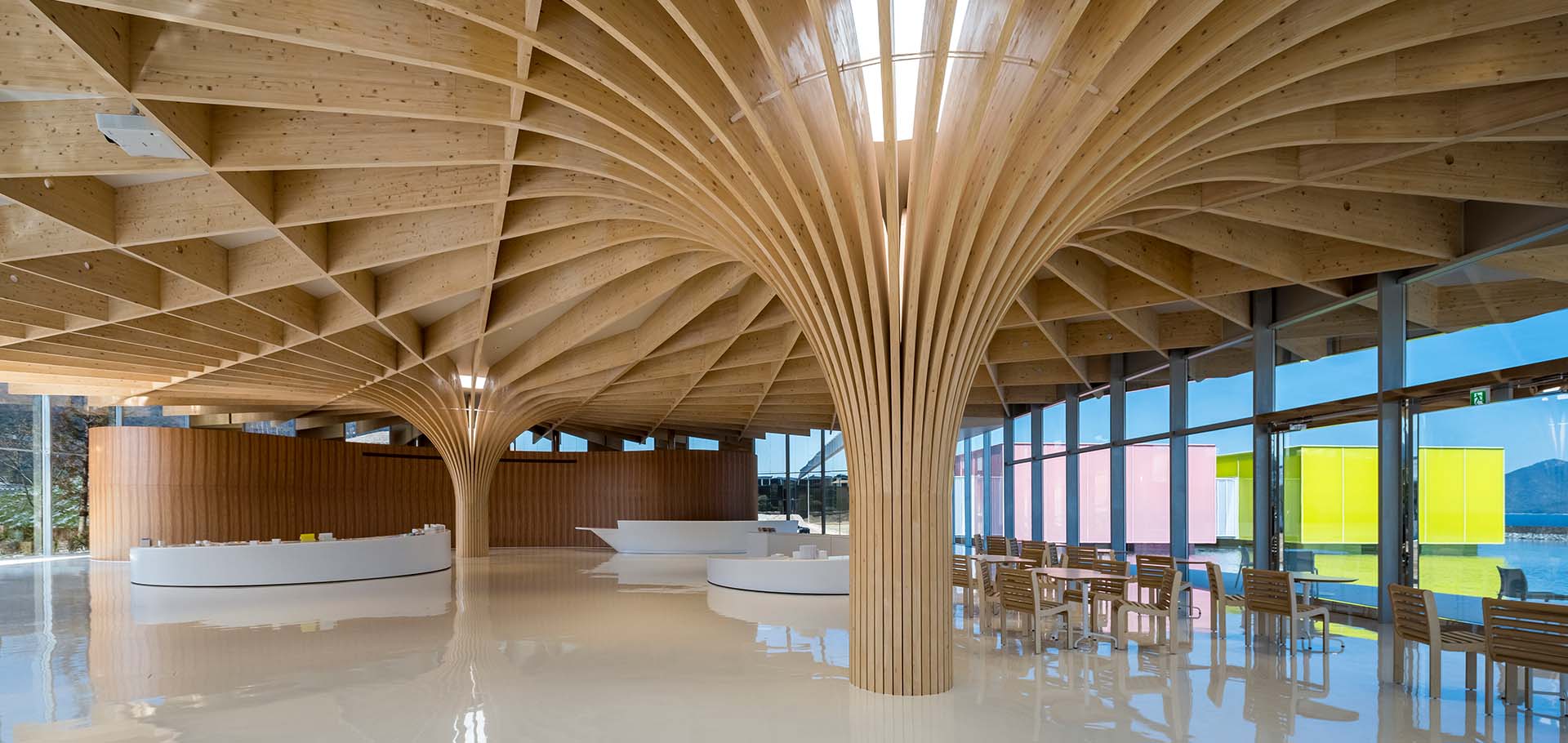

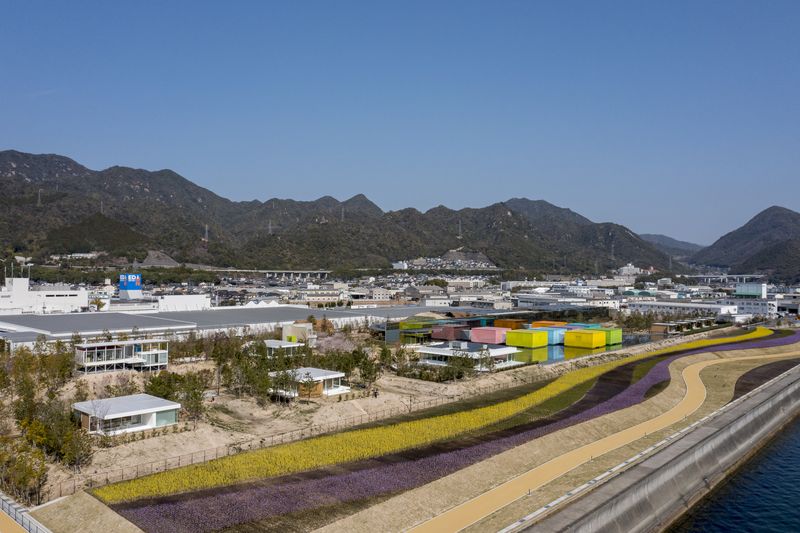
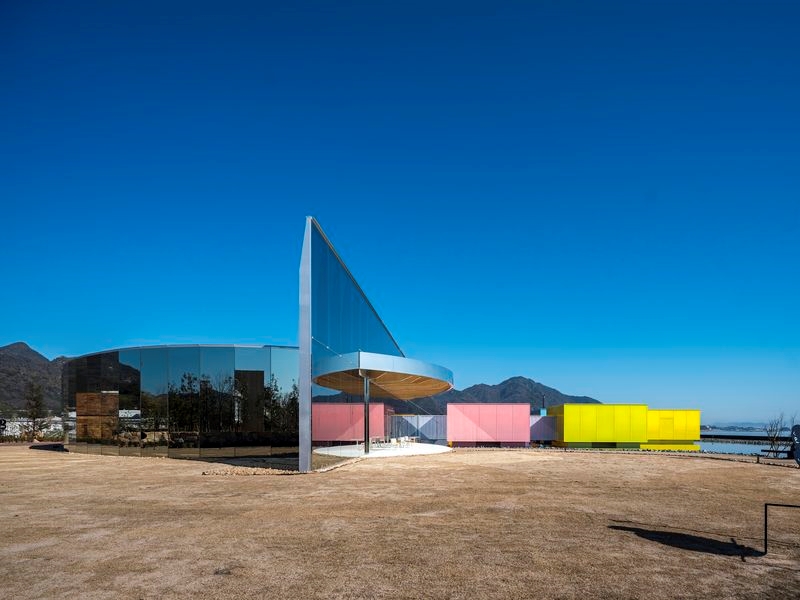
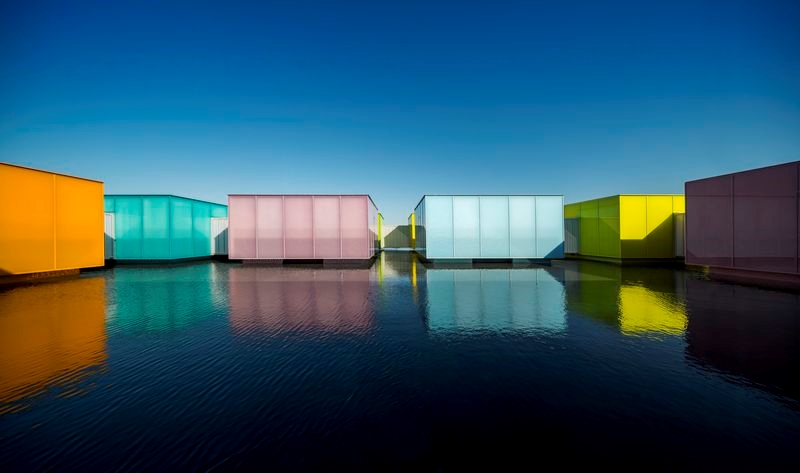
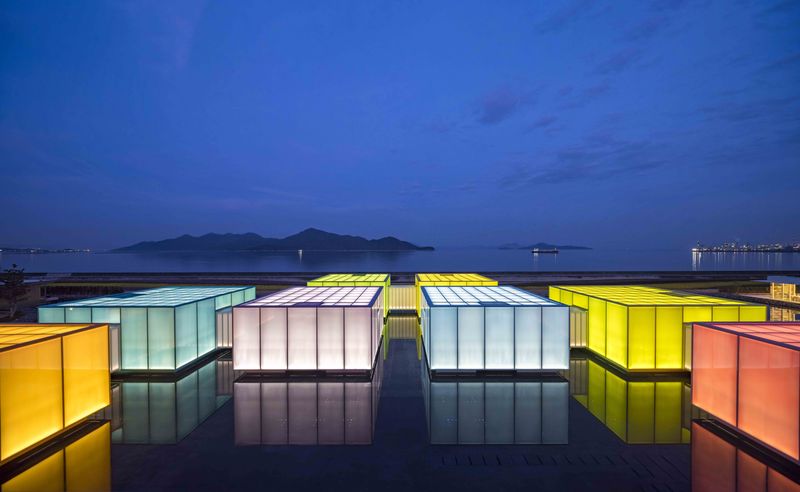
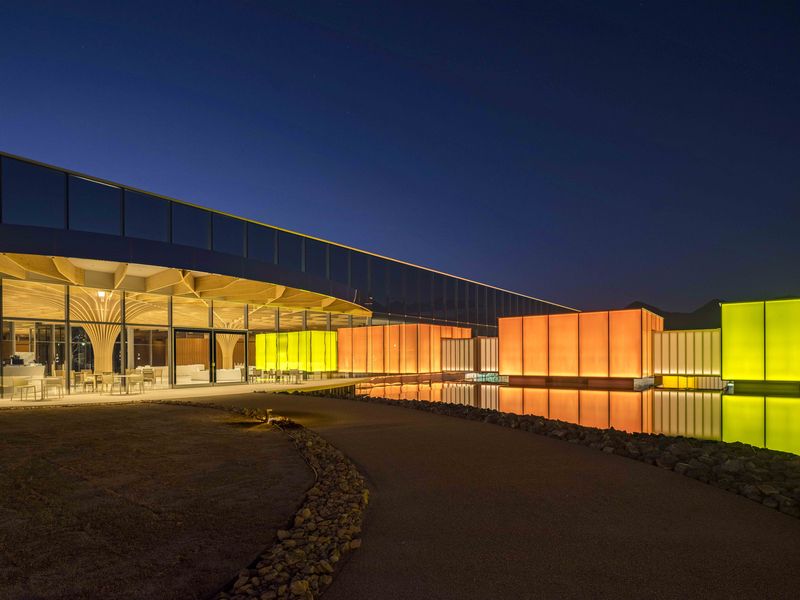
Located on a 4.6-hectare site facing the Seto Inland Sea, the facility consists of a museum, 10 villa-style accommodations, and a restaurant. In the center of the site, parallel to the coastline, a 180m-long, 8.5m-high mirrored glass wall has been erected to create a visual effect that doubles the landscape through reflection. In front of the mirrored glass wall is a water basin in which eight movable galleries are arranged, each covered with different colored glass, designed to create a landscape reminiscent of the beautiful scenery of the scattered islands of the Seto Inland Sea. These rooms float on barges. By raising the water level, they have a buoyancy that allows them to be moved by just two people, so the layout can be changed according to the exhibition narrative.
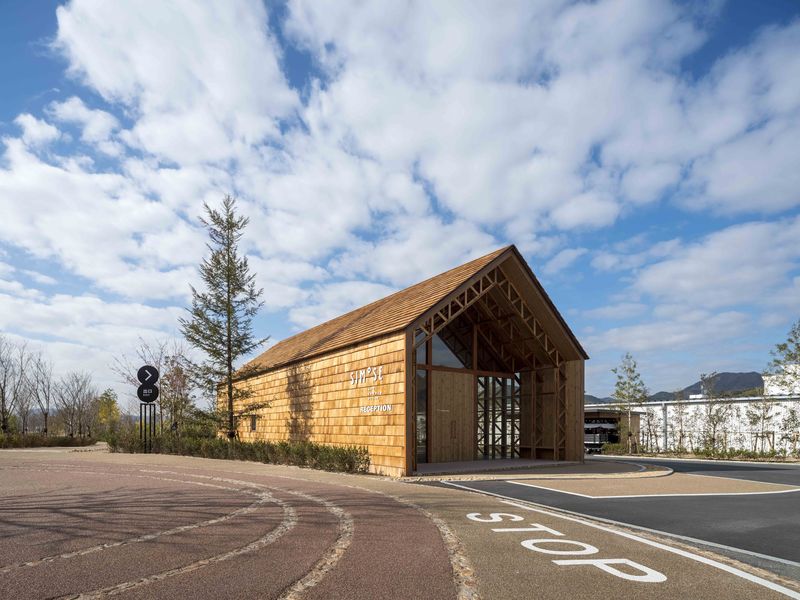
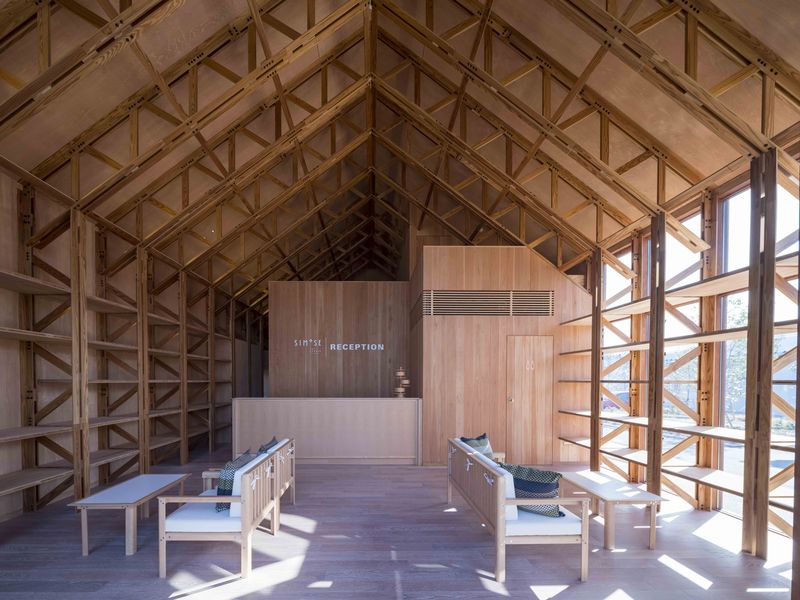
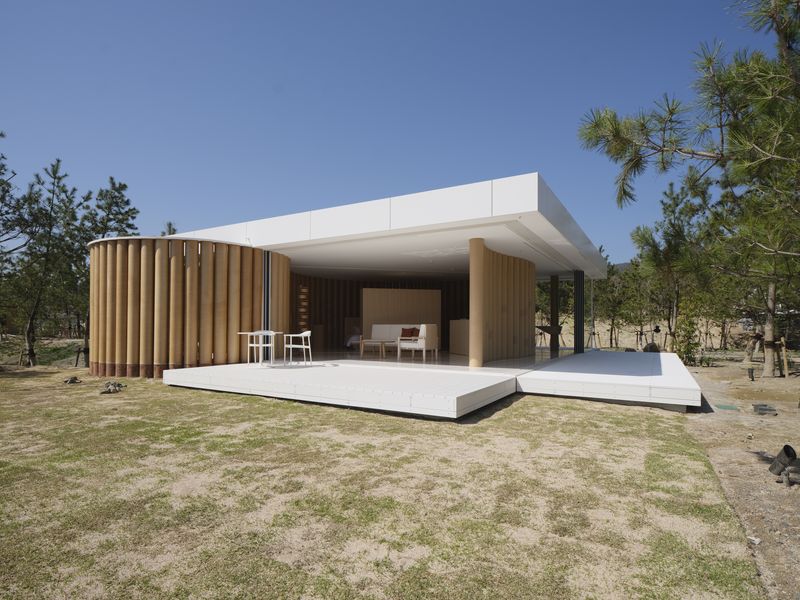
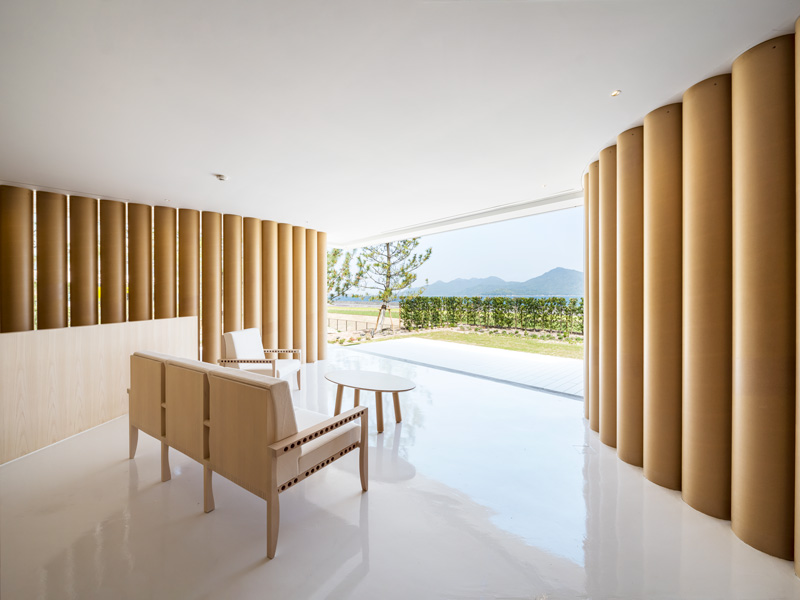
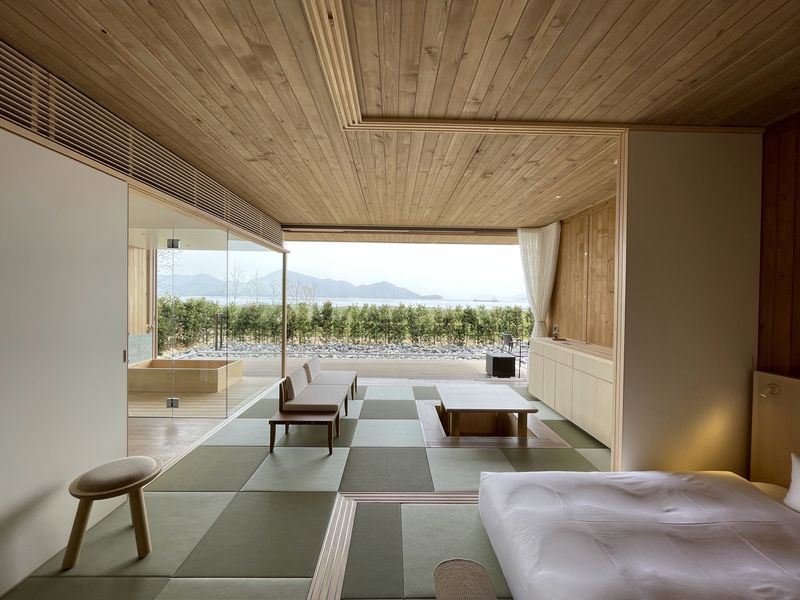
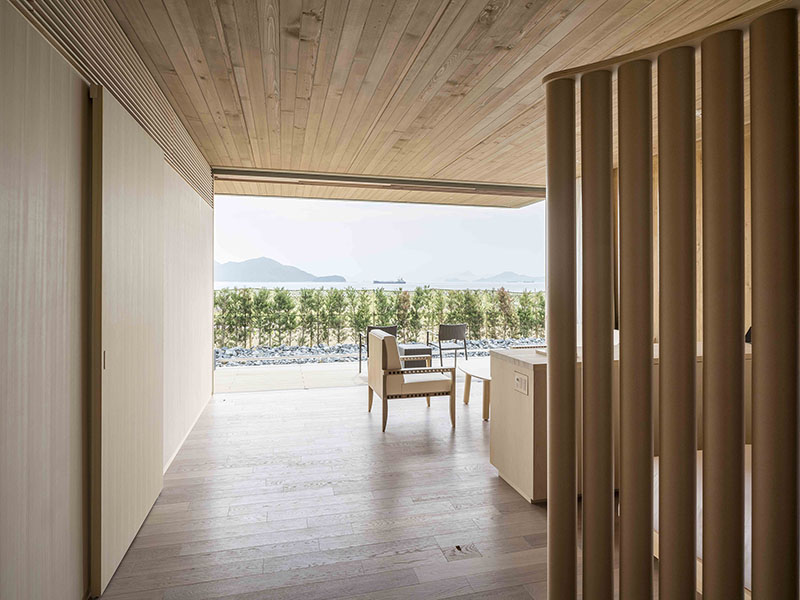
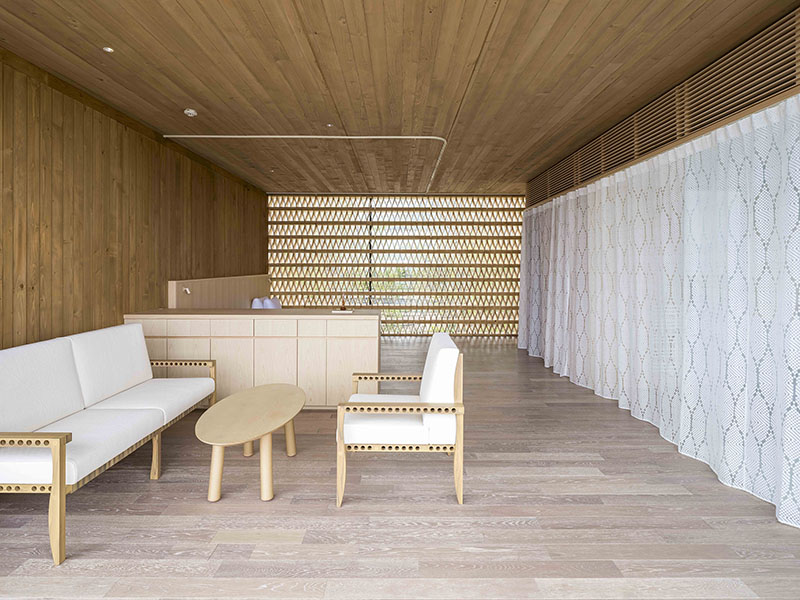
The structure of the reception building for the villas utilizes a newly developed engineered wood we call “wooden L-angle.” The design of each of the ten villas is different, creating enjoyment for guests who stay multiple nights or make return visits. Four of the villas are recreations of iconic early designs: “House of Double-Roof” (1993), “Furniture House 1” (1995), “Paper House”
(1995), and “Wall-Less House” (1997). Additionally, the “Cross Wall House” was designed in homage to John Hejduk, the former dean of the School of Architecture at Cooper Union, who had a significant influence on Ban during his student years.
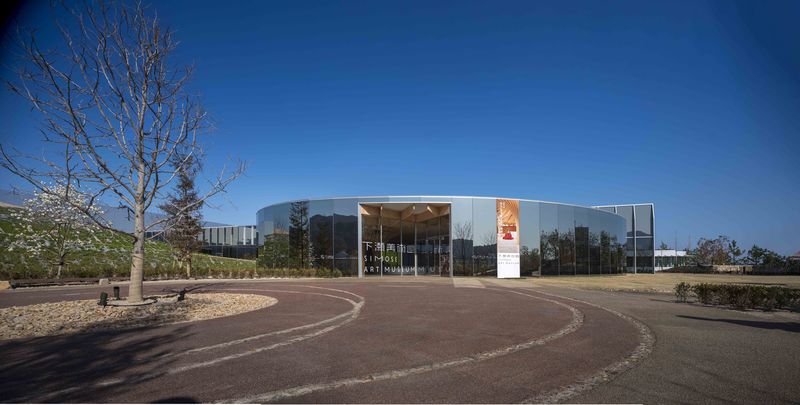
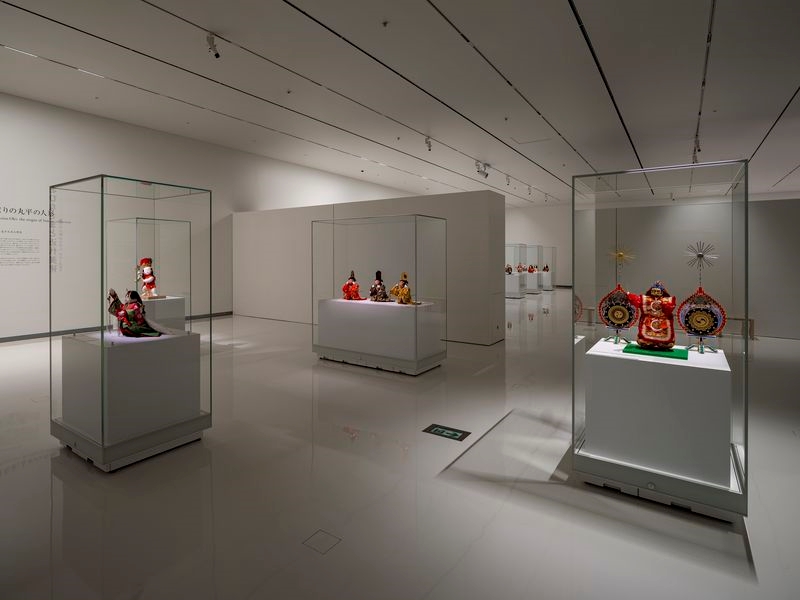
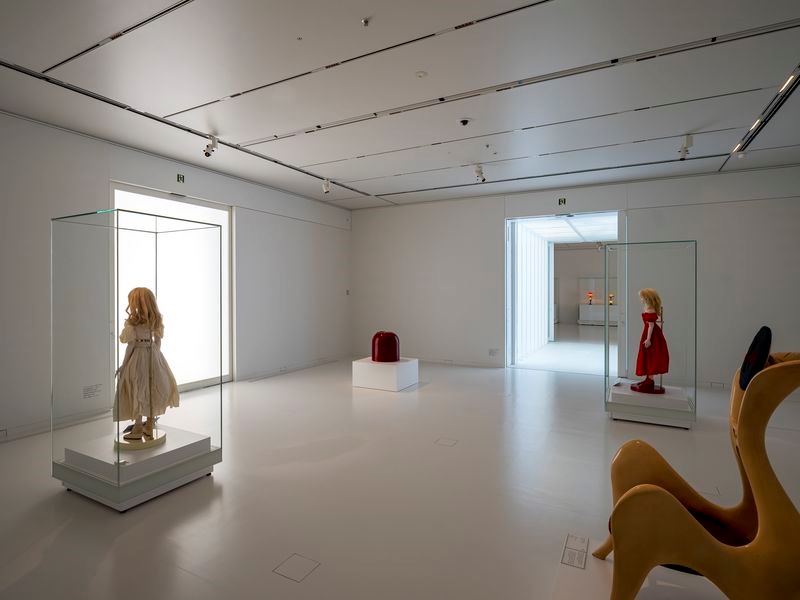
Simose Art Museum
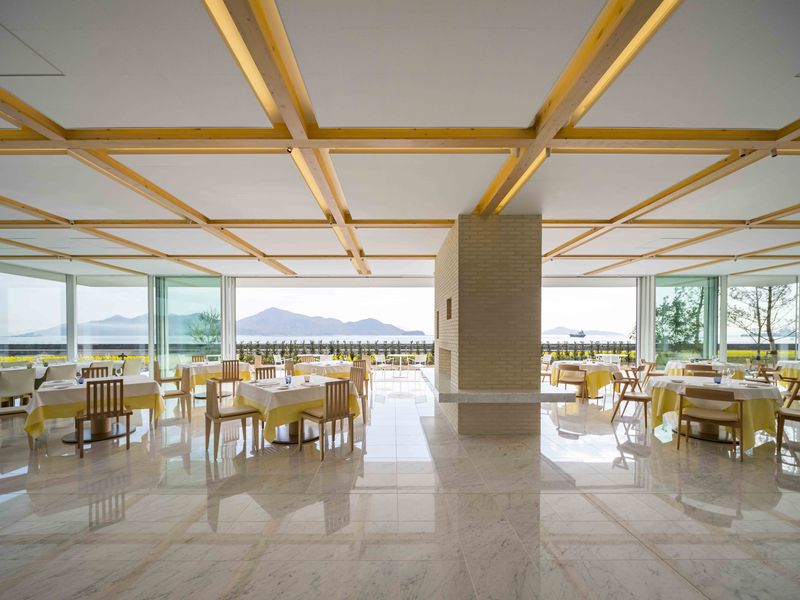
SIMOSE French Restaurant
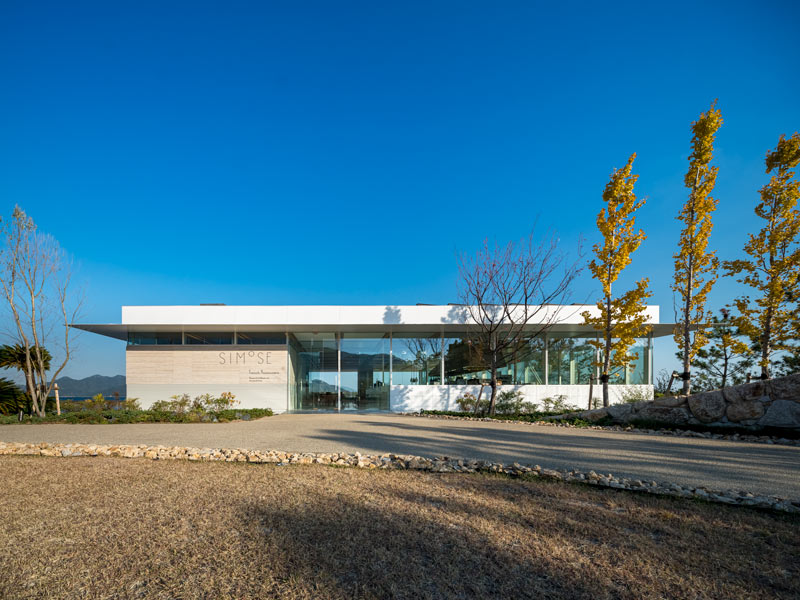
Simose Art Garden Villa